Arts policy

Growth or bust: artists’ futures out of their hands

The UK government’s neo-liberal business model underpinning the arts since the Millennium -  the most extreme ‘by far’ within Europe according to research by Alexander & Peterson - runs in direct opposition to social objectives to achieve human well-being, environmental sustainability and equity has consistently undermined artists’ livelihoods.
No time nor money

The new qualitative, longitudinal study of the lives of fourteen artists from three English regions, Artists’ lives: ecologies for resilience illustrates how policies have successively marginalised artists’ position in the infrastructures and ‘ecology’ of the arts. As a result, artists at all development stages lack social status, this whether seeking mutuality in their arrangements with commissioners and employers or dedicated research and development support. 

New Government, new deal?

In this MIAAW podcast Owen Kelly – author of Cultural democracy now, Routledge, 2023 – and I discuss implications for artists of the (now) Labour government’s ‘promise little’ pre-election arts policy with its misplaced reliance on creative industries rhetorics and in the context of social change, cultural democracy and lack of bees in my garden, identify some flaws in Arts Council England’s 5-point arts plan.

New deal: artists’ futures out of their hands

The UK government’s neo-liberal business model underpinning the arts since the Millennium – the most extreme ‘by far’ within Europe according to research by Alexander – runs in direct opposition to social objectives to achieve human well-being, environmental sustainability and equity and has consistently undermined artists’ livelihoods. Even in the…
Mission impossible?

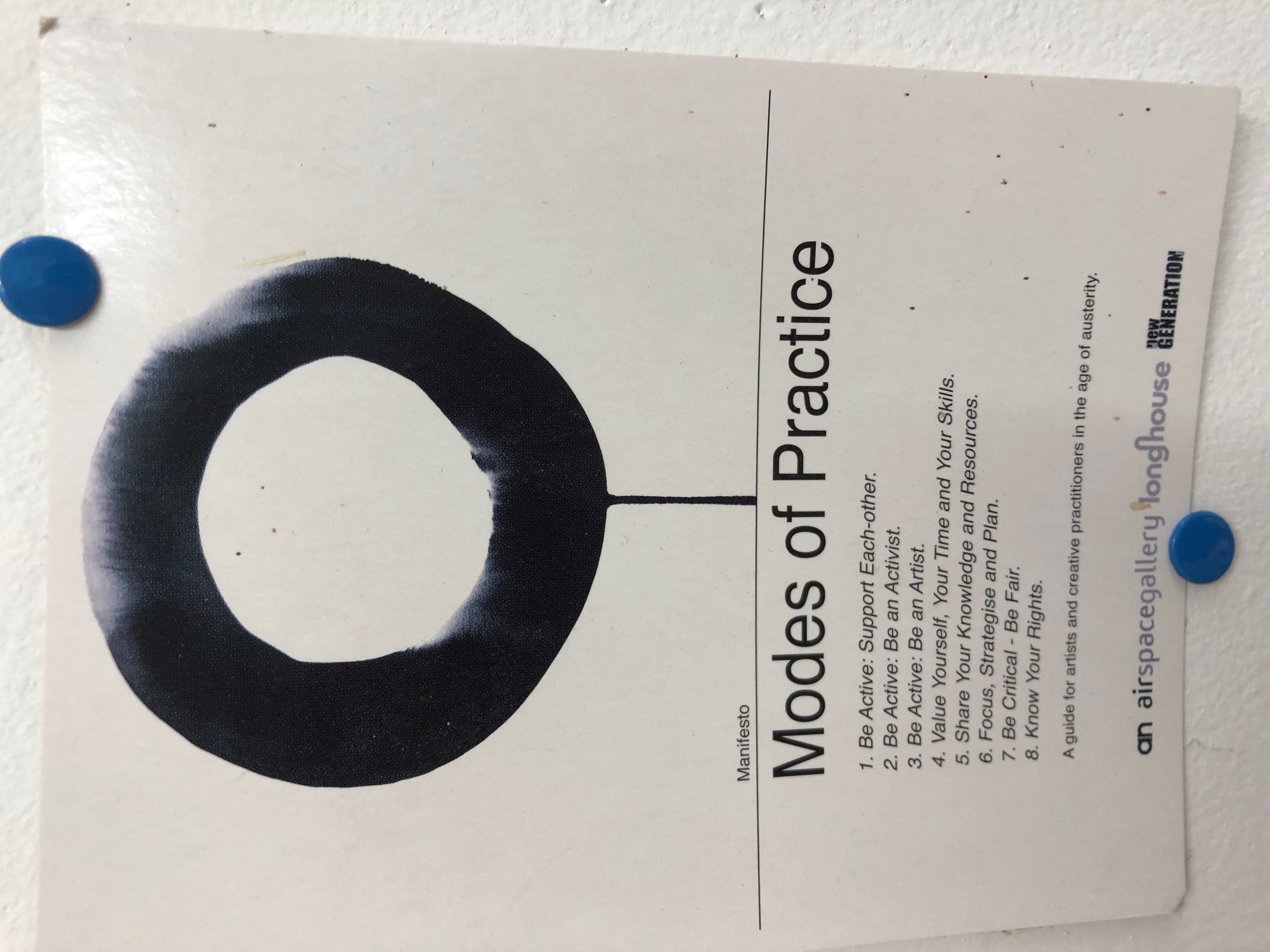
In conversation with Art Monthly’s Chris McCormack, Susan Jones considers the implications for artists trying to make a living from art practices in an “impossible arts infrastructure”.

Turning the tables: strategies for artists’ equity 

Presentation at the Aberdeen Mini-Summit on Artists’ Exploitation 16 July 2023 on the problematic conditions for artists’ practices and lives that affect their contributions to contemporary visual arts and society intended to inform strategies and infrastructures to secure artists’ social and economic status.

Cracking up 

Launched April 2020, the DCMS Select Committee inquiry sought evidence on Covid-19’s immediate and likely long-term impacts on the workings of sectors under the department’s remit. By collecting ideas and propositions for evolving these beyond the pandemic, the inquiry intended to evidence the effectiveness of government and arms-length bodies’ emergency responses and inform future policy.

Enforcement, equanimity and an afterword – thoughts on sustaining fair pay for artists

Introduction to fees to artists for exhibiting in public with examples indicating that sustaining such schemes is dependent on widespread and continued acceptance of the principle and rigorous self-regulation within the sector and on gaining suitable levels of public subsidy to the visual arts. Three financing options are considered in support of equanimity. An afterword considers whether in a political climate of reduced subsidy to the public sector, some new strategies are needed to finance the arts and artists’ contributions.

Bite the hand that feeds you

This provocation commissioned by Stoke Airspace for an Artists’ Soup Kitchen addresses and confirms the importance of the role and value of artists within cultural and social change. The four sections are designed to open up a discussion on ‘what now?’ and – more importantly – ‘what next?’ for Airspace and artists and future artists located in Stoke.

Creativity at the heart: the holistic approach

This paper combines arguments first presented by Susan Jones at the 2011 Engage annual conference in which she questioned the efficacy of our institutionally-driven visual arts ecology with new research and enquiry into future cultural, digital and social environments for the arts. It calls for adoption of more open, imaginative, lateral, collaborative and responsive approaches to creating cultural value, premised on building relationships and rapport with the different kinds and bandwidths of audiences and with the enablers and makers of art.